
Anxiety
Anxiety Counselling
When the worry won't switch off — and your body knows before you do — talking to someone who gets it is a real first step.

When anxiety starts shaping everyday life
Anxiety is one of the most common reasons people come to Bayridge, and one of the most treatable. If anxiety has started shaping how you move through your day, you are not alone, and practical help is available.
Read more Show less
Building tools that hold up in real life
In a calm, confidential space, a therapist helps you understand the pattern underneath the anxiety — the thoughts, habits, and triggers that keep it spinning — and builds steadier responses that last beyond the session. Therapy is less about “calming down” and more about gaining real tools: ways to settle your body, question anxious thoughts, and face the things you have been avoiding, a step at a time. Alongside individual counselling, Bayridge offers a free, CBT-informed online anxiety group for adults.
We also have a page on Anxiety in Children Counselling.
You might recognize some of this
You can start where you are.

- Excessive worrying
- Racing or repetitive thoughts
- Restlessness or feeling on edge
- Difficulty concentrating
- Tense muscles or physical discomfort
- Weakness and fatigue
- Irritability or a shorter fuse
- Trouble falling or staying asleep
This is a description of experiences, not a self-diagnosis checklist.

It may be time to talk to someone
You don't need to be in crisis to deserve support.
Consider reaching out if:
- A hard or frightening event has left you feeling on edge
- The worry is hard to switch off or bring under control
- It is getting in the way of work, sleep, or your relationships
- You feel depressed, or are leaning on alcohol or other substances to cope
- You think the anxiety could be linked to a physical health issue
Anxiety rarely settles on its own, and it is easier to treat early. Reaching out before it gets worse isn't an overreaction — it's the practical move.
Approaches a therapist may draw on
We match the approach to you, not the other way around. Your therapist may draw on one or several, depending on what fits.
Reshape the thoughts that keep worry spinning.
Identifies and reshapes the thought patterns that keep anxiety spinning. The most evidence-supported approach for anxiety disorders.
Therapists who work this way: Cognitive Behavioural Therapy (CBT)Make room for difficult feelings and move toward what matters.
Builds psychological flexibility — learning to make room for difficult feelings while moving toward what matters to you.
Therapists who work this way: Acceptance & Commitment Therapy (ACT)Let the brain reprocess what it has been holding.
Helps the brain reprocess distressing memories that may be fuelling anxiety.
Therapists who work this way: Eye Movement Desensitization and Reprocessing (EMDR)Notice the thought without being swept away by it.
Trains present-moment awareness so you can notice anxious thoughts without being swept away by them.
Therapists who work this way: Mindfulness TherapyBuild the future you want, not a map of the past.
Focuses on building the future you want rather than dissecting the past — practical, goal-oriented, and often brief.
Therapists who work this way: Solution-Focused TherapyA therapist who fits your situation
Our registered therapists have real experience helping people through what you are facing.




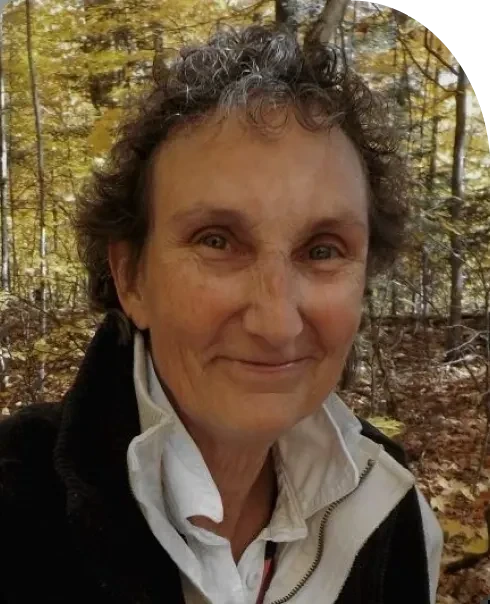

Dr. Cathryn Harris
Registered Psychologist
PhD, C.Psych.
Couples, Families, Individuals
View profile
Cathy Penny
Registered Social Worker
BA, BSW, MSW, RRP, RSW
Couples, Families, Individuals
View profile
Rev. Chad Tomlinson
Registered Psychotherapist
MTS, MEd, MA, OCT, RP
Couples, Families, Individuals
View profile







Gretchen Savery
Registered Psychotherapist (Qualifying)
MA, BA, RP (Qualifying)
Families, Individuals
View profile
Hanah Dimitrijevic
Registered Psychotherapist (Qualifying)
MA, RP (Qualifying)
Individuals, Families
View profile





Joel Roberts
Registered Psychotherapist (Qualifying)
BA, MA, RP (Qualifying)
Individuals, Couples
View profile











Lisa Bynoe-Stevens
Registered Psychotherapist
BASc, MDiv, CSFT, RP
Couples, Families, Individuals
View profile





Michelle Hodgson
Registered Social Worker
SSW, BA, BSW, MSW, RSW
Couples, Families, Individuals
View profile
Michelle Pennells
Counsellor and Art Therapist
HBA, DTATI (Thesis Pending)
Families, Individuals
View profile











Dr. Sharon Verniero
Registered Psychologist
PhD, C.Psych.
Families, Individuals, Couples
View profile


Veesta Mavandadi
Registered Psychological Associate
MA, BSc, C.Psych.Assoc.
Individuals, Families
View profileCommon questions
Anxiety is the feeling of apprehension, fear or panic, sometimes experienced with heart palpitations, racing thoughts, shaking, sweating, and feelings of heightened stress. In small doses it is normal and even useful — it becomes worth addressing when it sticks around and starts getting in the way of everyday life. 1 in 4 Canadians will experience an anxiety disorder at some point in their lives, making it the most common mental health problem in the country.
Life events like trauma appear to trigger anxiety disorder in people who are prone to it, and there is a hereditary component. Anxiety and depression often travel together — around half of Canadians diagnosed with depression or a related mood disorder also have an anxiety disorder. It can also be connected to other health issues such as thyroid problems, heart disease, diabetes, chronic pain, irritable bowel, and ADHD. You don't need to know exactly why to start feeling better; a therapist helps you make sense of your own pattern.
Everyone feels anxious sometimes — before a big event, during conflict, or when something uncertain is looming. It tips into a disorder when the worry is hard to control, persists well beyond the situation that triggered it, and starts disrupting work, sleep, or relationships. If symptoms like racing thoughts, muscle tension, restlessness, or difficulty concentrating show up most days over several weeks, that pattern is worth exploring with a professional — even if each symptom on its own seems manageable.
The first recommended treatment for anxiety is psychotherapy or talk therapy. Cognitive Behavioural Therapy (CBT) is one of the most effective and best-supported approaches — it helps you notice and reshape the thoughts that keep worry spinning. Many people also benefit from mindfulness, EMDR, or ACT. Medication helps some people too, often in combination with therapy — that's a conversation for your doctor. Most of our clients seek out psychotherapy first. Your therapist tailors the approach to what fits you.
Counselling helps you understand how your mind is connected to your body and emotions. It gives you a calm, confidential space to identify what's driving the anxiety, then teaches practical skills — through CBT, mindfulness, and other approaches — to manage symptoms and reduce how often and how intensely they show up. The aim is not just to feel better in the room, but to carry those tools into daily life.
Everyone is different, but many people feel some relief within the first few sessions. CBT is one of the best-supported treatments for anxiety. How long it takes varies with severity — CAMH puts typical treatment at 12 to 20 sessions, though some people improve significantly in four to six. Deeper change builds over time and depends on the individual and the severity of the anxiety.
Yes. Anxiety often looks different in children and teens — school refusal, stomach aches, clinginess, meltdowns, or withdrawal that can be mistaken for behaviour problems. We have registered therapists who specialize in child and adolescent anxiety, using age-appropriate approaches like play therapy and CBT adapted for younger clients. Parent involvement is part of the process. Learn more on our anxiety therapy for children page.
Care you can lean on
Sessions with our registered therapists are covered by most extended health and workplace benefit plans. Not sure what yours includes? We're happy to help you check before you book.
Sessions start at $90 and vary by therapist. Not sure where to begin? Our Intake Specialists can talk through fees, coverage, and which therapist fits what you are facing — call (905) 319-1488 during business hours.







Ready when you are — we're here to listen
Browse our registered therapists and reach out when you're ready — we'll usually reply within one business day.