What You Are Fighting About is Not What You Are Fighting For By Mark Laing, Certified Imago Therapist

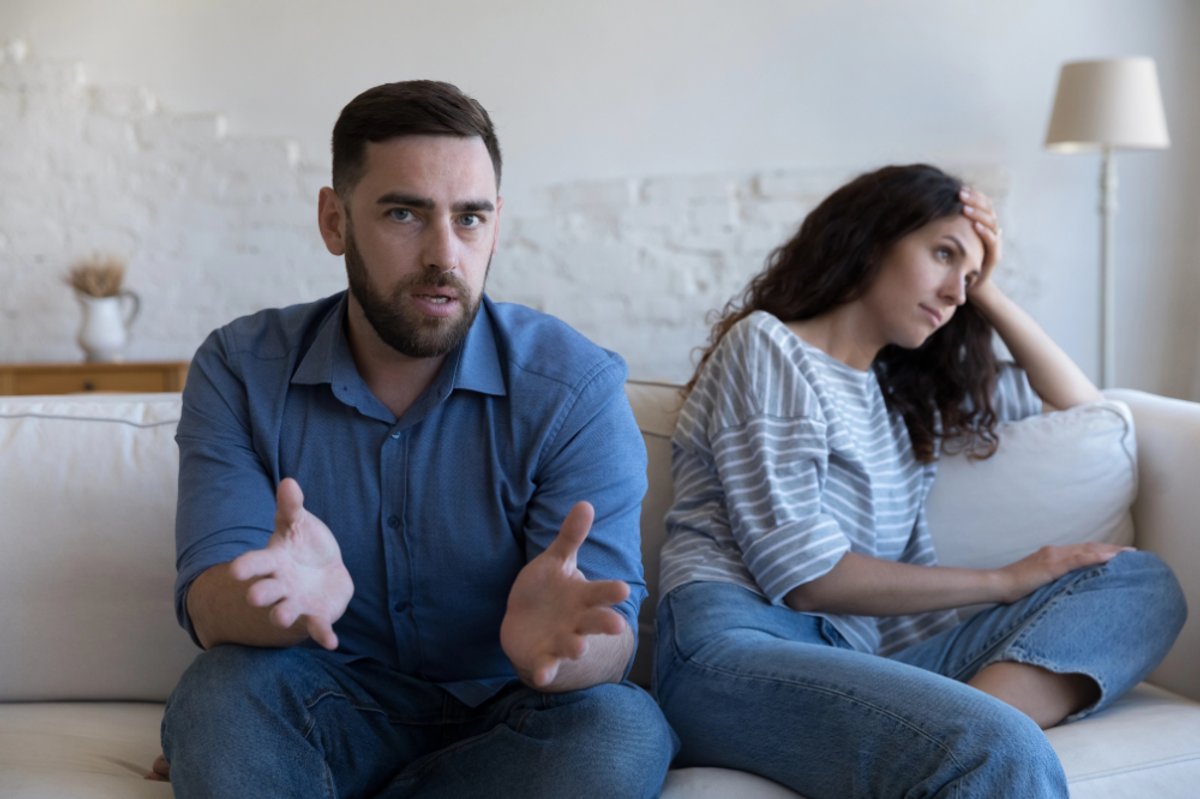
Many people think that the purpose of going to relationship therapy is so that the therapist can keep them together. This would not be true. The purpose is for each individual to learn how to look at their own reflection to discover ways they are showing up that do not allow them to be the best partner they can be. My wife and I have often noted that the hardest thing either one of us has had to learn how to do is to become a great partner.
We find someone and fall in love, and somewhere we think we have found the perfect person. If you think about most weddings, the bride and groom endeavour to create the perfect day. Perhaps that is an effort to mirror their belief that they have found the perfect relationship.
That beginning period is referred to as the romance phase. This truly lulls both the bride and the groom into believing they have found perfection. Sure, they will say, “I know I’m not perfect, or I know my partner isn’t perfect,” but deep down, they are depending on it being perfect…and then it isn’t. This phase usually lasts 12 to 18 months before the flicker of perfection begins to wane.
So, what is really going on then? How can it be that I was so sure I had found the perfect one on my wedding day, and a year later find myself wondering if I married the wrong person? The mistake lies in thinking it is all about the other person, when it is really about you. Ouch! But I am doing my best, or I am better than my partner, or they can be so unfair or mean. Still, it is about you. Now, for clarification’s sake, we are not throwing an abusive partner into this mix; that is a whole other kettle of fish. We are talking about your average, flawed person.
Harville Hendrix observes this when considering the purpose of relationship therapy, “the purpose is to free people from the prison of their own reactive brains and regain their natural state of open collaboration with each other. If they cannot connect to their capacity for knowing their chosen other, they have no conduit for self-knowing, and therefore, they find themselves disconnected from feeling a broader communion with everything else in life - spiders, hedgehogs, clouds, rocks…all of it!”
So why does something that initially feels so easy to do become a completely different reality and frustration? For the most part, as mentioned earlier, the reason stems from the focus on the other. Think of loving couples who sit and stare into each other’s eyes and how comforted they are by that process. It is also interesting to note that mom and baby do the same thing for the exact same reason…to feel safe and connected. The mother and child relationship for the first couple of years is a process of right-brain mom synchronizing with right-brain baby. But like the romance phase, this too comes to an end in the second year when the left-brain dad begins to help the developing left-brain baby synchronize, and this is the beginning of developing logic, setting reasonable expectations on self and others, and regulating aggression. The relationship goes from warm and fuzzy right brain to logical left brain. In a relationship, it goes from the warm fuzzy (right-brain) where the couple have firmly established they love each other, to the logical left brain of ‘how are we going to do “Us?”’ I see this often where couples begin to argue about how illogical their partner’s dishwasher stacking skills are, or what is the proper way to sweep a floor, or vacuum. Nowhere in this disagreement or argument is there any room for the warm fuzzy right-brained stuff; it is also so seemingly logical. I need you to see the work exactly as I see it, and because you don’t, I experience that as an error in synchronization, and ultimately, I feel disconnected from you. This is an example of where we want our partner’s image to be the same as our own. Now, this partner begins to tell you how controlling you are or unreasonable you are because their right brain is telling them they are being attacked, and they have to defend in the hope of returning to that wonderful romantic place again.
What is getting in the way are the wounds, deficits and unmet needs of a lifetime, a long time before you ever knew your partner walked the earth. Yes, we are talking about life as a child or what we refer to as your family of origin. It is important to note here that this exploration is not about blaming mom or dad or both; it is about contribution, not blame. I don’t blame the cake on the flour; the flour contributed along with the butter, oil, eggs, water, etc., which I threw into the mix. To blame would sadly leave you stuck in the role of victim with no hope of growth or connection if you stay in that role.
So, in our childhood, stuff happens that hurts us. This is not usually a result of some malicious act, but is often the result of reduced self-awareness and/or ignorance from mom and/or dad. They have only to give what they experienced themselves from their childhood. This hurt, sadly, is not resolved in childhood, mainly because we lack the wisdom and experience to be able to resolve it in childhood, so the hurt stays put waiting for a time when we can resolve it. As one psychologist frames this experience, “the body keeps the score.” Later in life, when we’re in a better place to deal with those wounds, they garner our attention when our partner says or does something that reminds us of that wound, deficit or unmet need. Interestingly, when our partner triggers us, how we react will trigger them, and now we are fighting about something without knowing why.
Research has shown that we are most likely to choose someone who has the same wound, deficit or unmet needs as we have, and vice versa. How you got our wounds might be night and day different than how your partner got their wounds, and how you react when triggered might be night and day different than how your partner reacts. But know this, when partner A triggers partner B, how partner A acts will trigger partner B and how partner B reacts will further trigger partner A. Are you beginning to see that most fights and disconnection with couples is about their childhood and not their partner, they just don’t realize that. When disconnection is created, we will push or protest or turn away to protect ourselves from rejection and then, ultimately, we will have a meltdown as identified from the research of Sue Johnson and Ed Tronick. Our partner had triggered an old wound, and we feel disconnected and blame them, but the truth is that there is no way they could have known about that wound lurking in the dark. Often, the way an adult behaves in that moment can be perceived as acting in a manner that is more childish than adult, and if we are able to sense how old they are in that moment of meltdown, it usually pinpoints how old they actually were when they were wounded.
So, you might say that one of the most significant purposes of a relationship is to work through the prison of those unmet needs and wounds. This process requires the following steps, according to Harville Hendrix in his book, “Doing Imago in the Space Between.” He notes the following to find the healing we are searching for:
Create and sustain a safe environment.
Identify earlier life challenges and become more empathic.
Learn how your defences developed because of negative exchanges.
Reconnect with the person who both embodies one’s challenges and has the power to help transform them. That is really the reason you chose them in the first place!
Learn the skill of dialoguing with your partner with curiosity and empathy as a means of encountering self-validation. Stop debating and start listening.
Become an advocate for and celebrate each other’s differences. (In other words, they don’t have to be a carbon copy of you).
One of the more difficult skills to learn in this process is to listen. We have all been deeply trained to debate or withdraw. The problem with a debate is that you have two speakers and no one is listening. The second problem is that in a debate, someone has to lose. Learning to communicate better is not about developing a huge vocabulary or becoming an expert at putting together a proof that cannot be disproven. The goal of communication is either to mend a disconnection or to maintain a connection. When our partner says or does something foreign to our way of thinking or doing, we become alarmed and reactive, and this is how we came to believe that if they were just like me, then everything would be OK. How do you think you will decide which version, you or your partner, should be the prevailing template of the relational worldview?
So, if you are feeling disconnected and wondering who blew out the spark, the answer is both of you did. It is true that we become defensive and reactive when we feel stuck. One of the things I have found helpful in those moments when my partner is upset and feeling disconnected is to remind myself that they are not giving me a hard time; they are having a hard time. This, I have found, has been helpful to switch me from defence to empathy and curiosity. This means to learn to listen, to understand, and not to prove your point. Ask yourself, “Do I want to be right or do I want to be in a relationship?” Online counselling can also support this process.
If, on the other hand, we avoid having those difficult conversations or withdraw, we are trading short-term discomfort for long-term dysfunction. Remember that conflict resolution is just growth trying to happen. Finally, relationships don’t last because of the good times. They lasted because the hard times were handled with love and care. Your world will not become better by demanding that someone do it your way. Your world will not be better by changing your circumstances; it will improve when you adjust your attitude. At Bayridge Counselling Centres, we’ve helped hundreds of couples through this exact journey. We understand the complexity of your pain and don’t promise easy answers, but we do offer evidence-based approaches, compassionate support, and realistic hope.